
Leadership
The Quest for Purpose Continues
Leadership Styles
There are eight distinct leadership styles, each with its own strengths and weaknesses. The most common styles are autocratic, participative, laissez-faire, transformational, transactional, affiliative, coaching, and bureaucratic. Each style is appropriate for different situations and contexts, such as organizational maturity. A good leader has great situational awareness, as well as self-awareness, and applies the style best suited to the situation. We will look at each of these styles in more detail in a minute.
There is another dimension of leadership styles based on the focus of the team. Every team becomes naturally either goal-focused or process-focused. Goal-focused teams are driven by achieving specific objectives and outcomes. The team's motto becomes, "the end justifies the means." They are results-oriented and prioritize efficiency and productivity. Process-focused teams, on the other hand, are more concerned with the methods and procedures used to achieve their goals. Their motto becomes, "it's not whether you win or lose but how you play the game." They prioritize quality and consistency over speed and efficiency. A good leader is able to recognize the natural focus of their team and adapt their leadership style to move the team's focus closer to the center; both goals and process are equally important for success.
-
Autocratic or Authoritarian
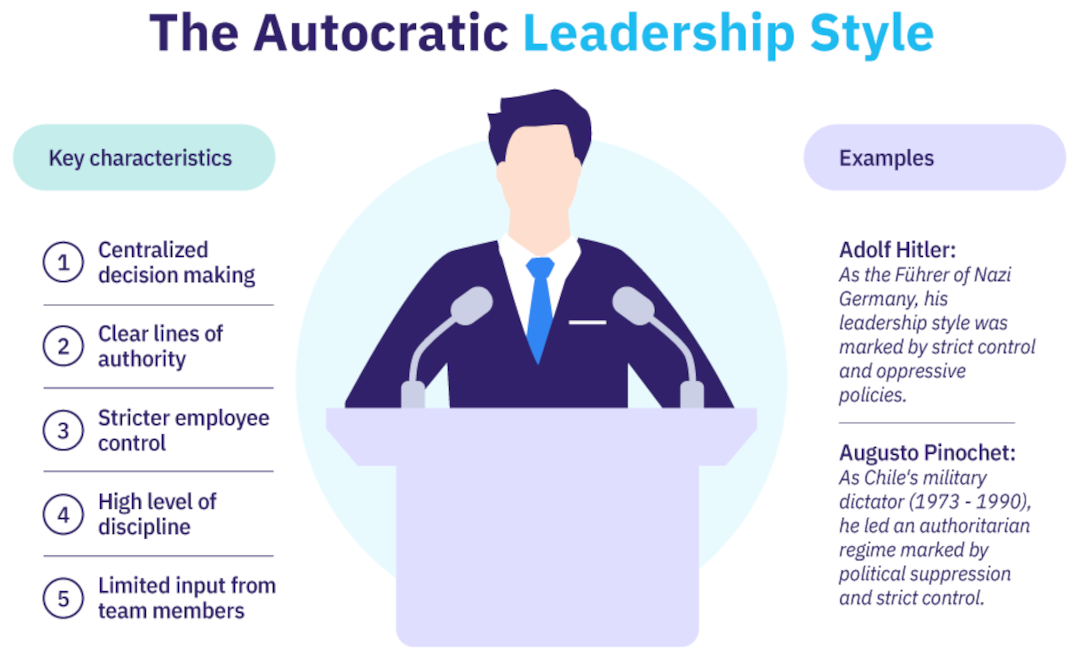
Image courtesy of AIHR.com. The autocratic leader rules from position power. They make decisions unilaterally, without consulting their team members. This style is effective in situations where quick decisions are needed, such as during a crisis. As I wrote earlier, when the roof is on fire, you don't ask the team for their opinion on how to put it out. We are not having brainstorming sessions or go for moonlit walks on the beach holding hands. The autocratic leader provides clear direction and expects compliance from their team members. However, this style can lead to low morale and lack of creativity among team members. This leadership style emphasizes obedience, discipline, performance, and control while stifling innovation. It is often used in military or emergency situations where quick decisions and action are necessary.
-
Participative or Democratic
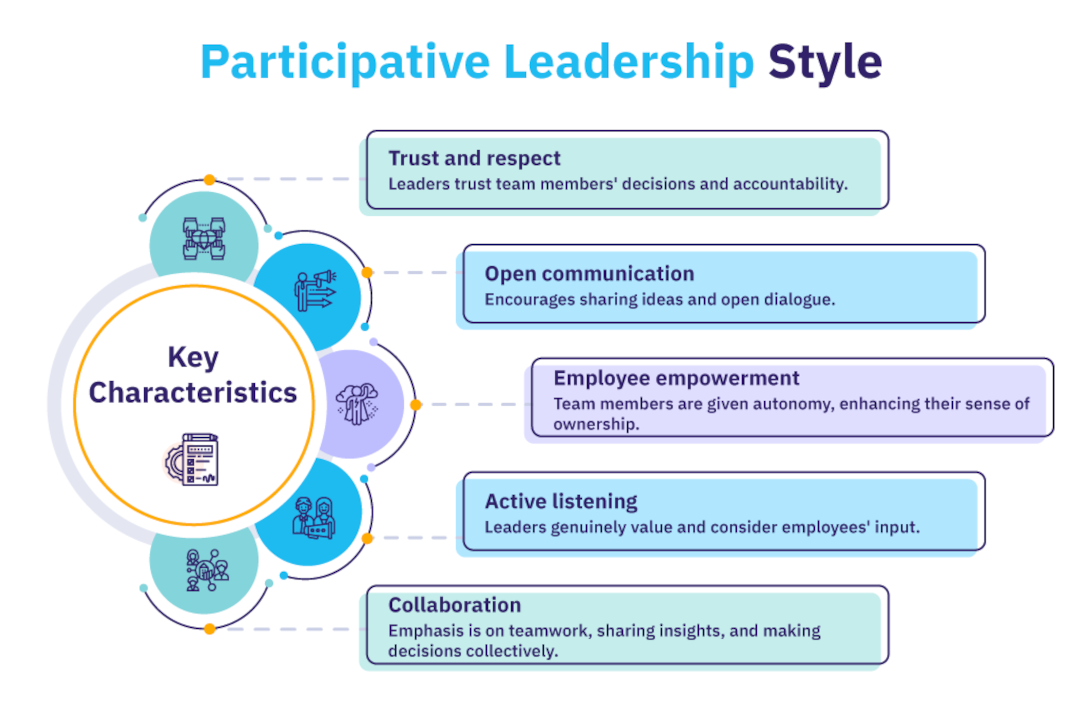
Image courtesy of AIHR.com. The participative leader rules from personal power, which comes from their natural enthusiasm and the strength of their convictions. They involve their team members in the decision-making process and encourage collaboration and teamwork. This style is most effective in situations where team members have valuable expertise and insights to contribute. The participative leader fosters a sense of ownership and commitment among their team members, leading to higher morale and creativity. However, this style can lead to slower decision-making and lack of clarity in roles and responsibilities. Remember, a business is not a democracy!
-
Laissez-faire or Delegative
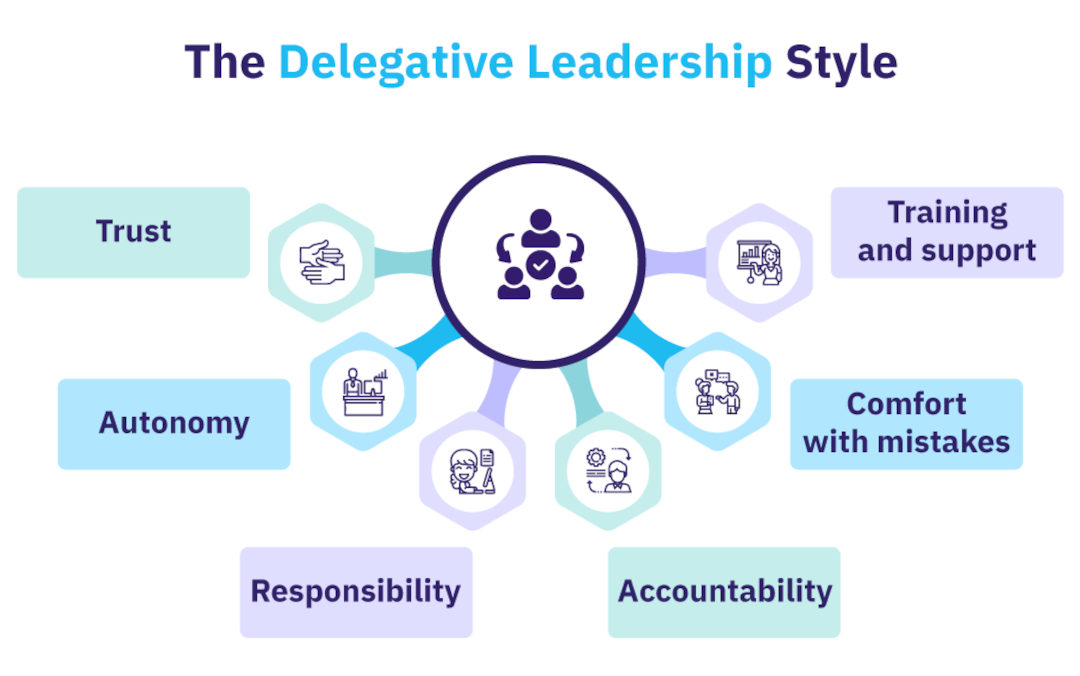
Image courtesy of AIHR.com. Laisses-faire comes from French, meaning "let do" or "let it be". The laissez-faire leader takes a hands-off approach and allows their team members to make decisions and take responsibility for their work. This style is most effective in situations where team members are highly skilled and motivated. The laissez-faire leader provides support and resources as needed but does not micromanage their team members. However, this style can lead to lack of direction and accountability among team members. I often characterize this leadership style as "stewardship", with the intent on keeping the ship sailing smoothly in the right direction while allowing the crew to make decisions on how best to navigate.
-
Transformational or Facilitative
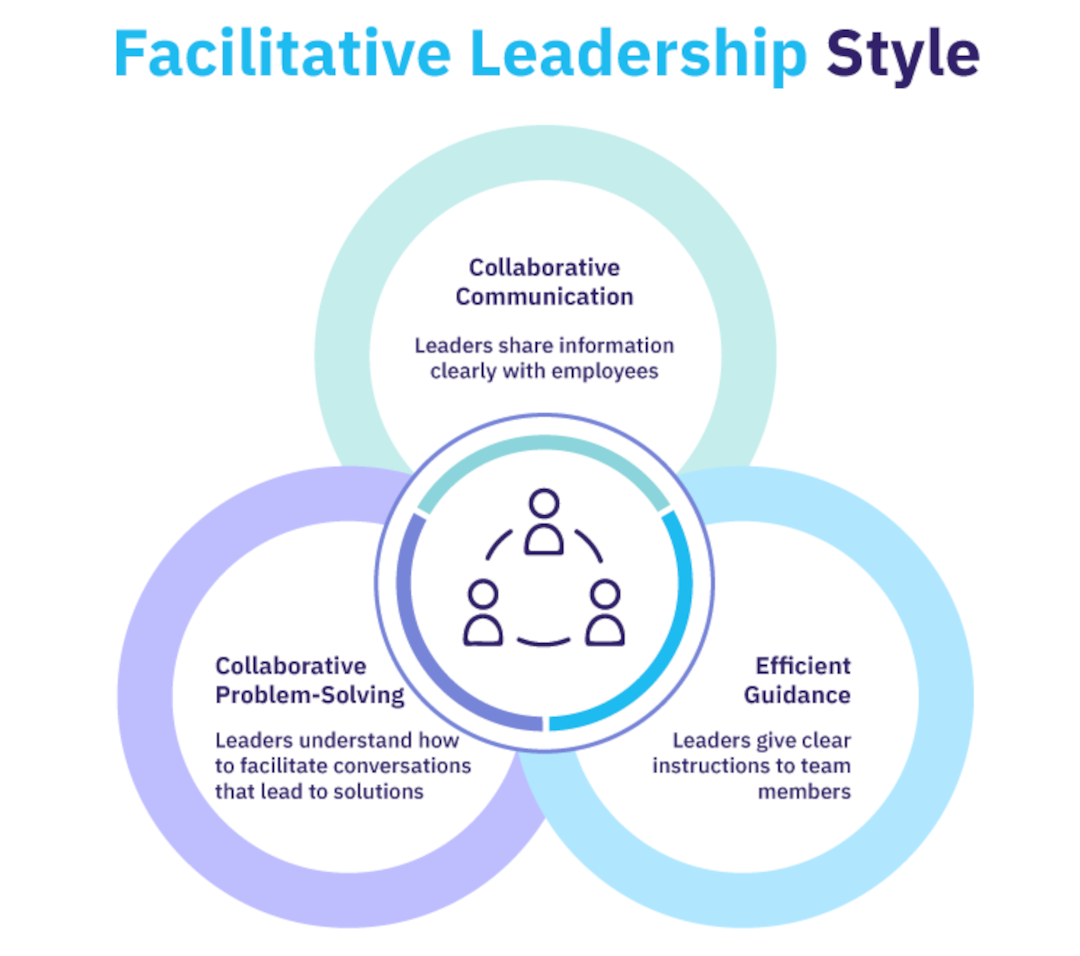
Image courtesy of AIHR.com. Transformational, facilitative leaders inspire and motivate their team members to achieve a shared vision. They have an intense focus on the BHAG, the Big, Hairy-Assed Goals. They prioritize developing their team members' potential and creating a culture of innovation and creativity. This style is most effective in situations where change is needed, such as during a company turnaround or when launching a new product. The transformational leader encourages their team members to think outside the box and take risks. However, this style can lead to lack of structure and accountability among team members.
-
Transactional or Relational
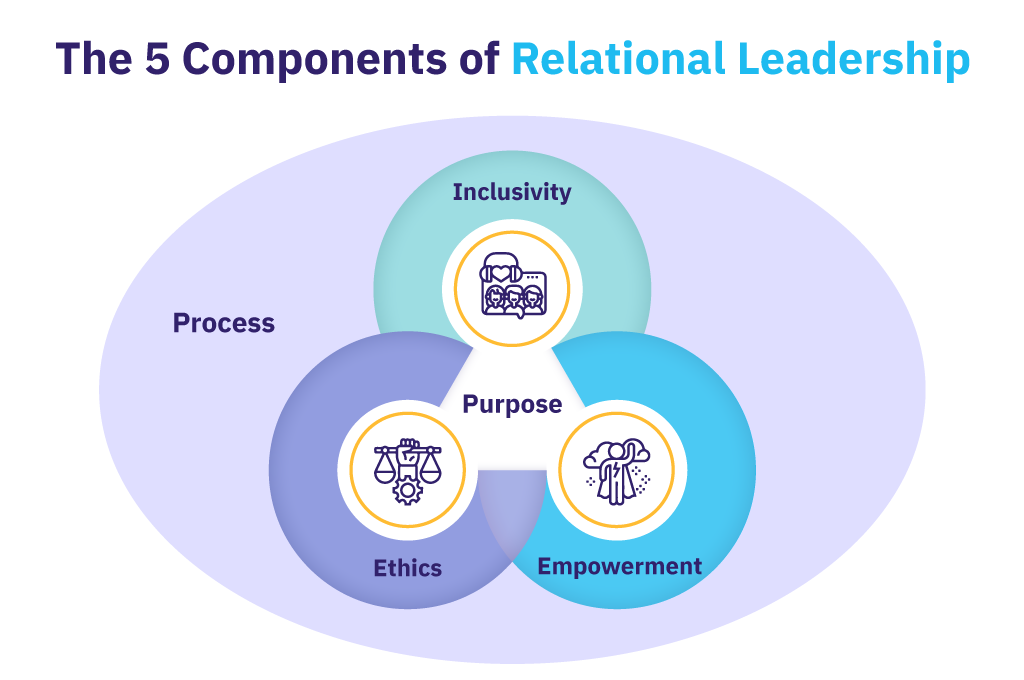
Image courtesy of AIHR.com. A transactional leader focuses on maintaining the status quo and achieving specific goals. They use rewards and punishments to motivate their team members and ensure compliance with rules and procedures. This style is most effective in situations where routine tasks need to be completed, such as in manufacturing or customer service. The transactional leader provides clear expectations and guidelines for their team members, leading to higher efficiency and productivity. However, this style can lead to lack of creativity and innovation among team members. Transactional leaders are often negotiators and almost everything becomes a deal.
-
Affiliative
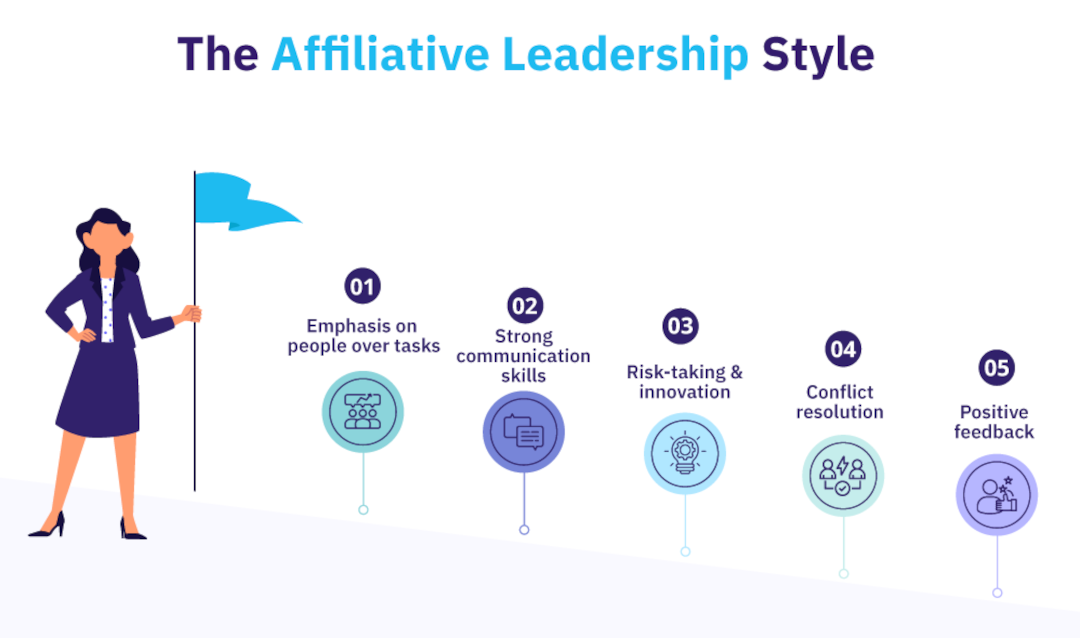
Image courtesy of AIHR.com. The affiliative leader puts the needs of their team members first and prioritizes their development and well-being. They focus on creating a supportive and collaborative work environment. This style is most effective in situations where team members need support and guidance, such as in non-profit organizations or healthcare settings. The servant leader fosters a sense of community and trust among their team members, leading to higher morale and job satisfaction. However, this style can lead to lack of direction and accountability among team members.
-
Coaching
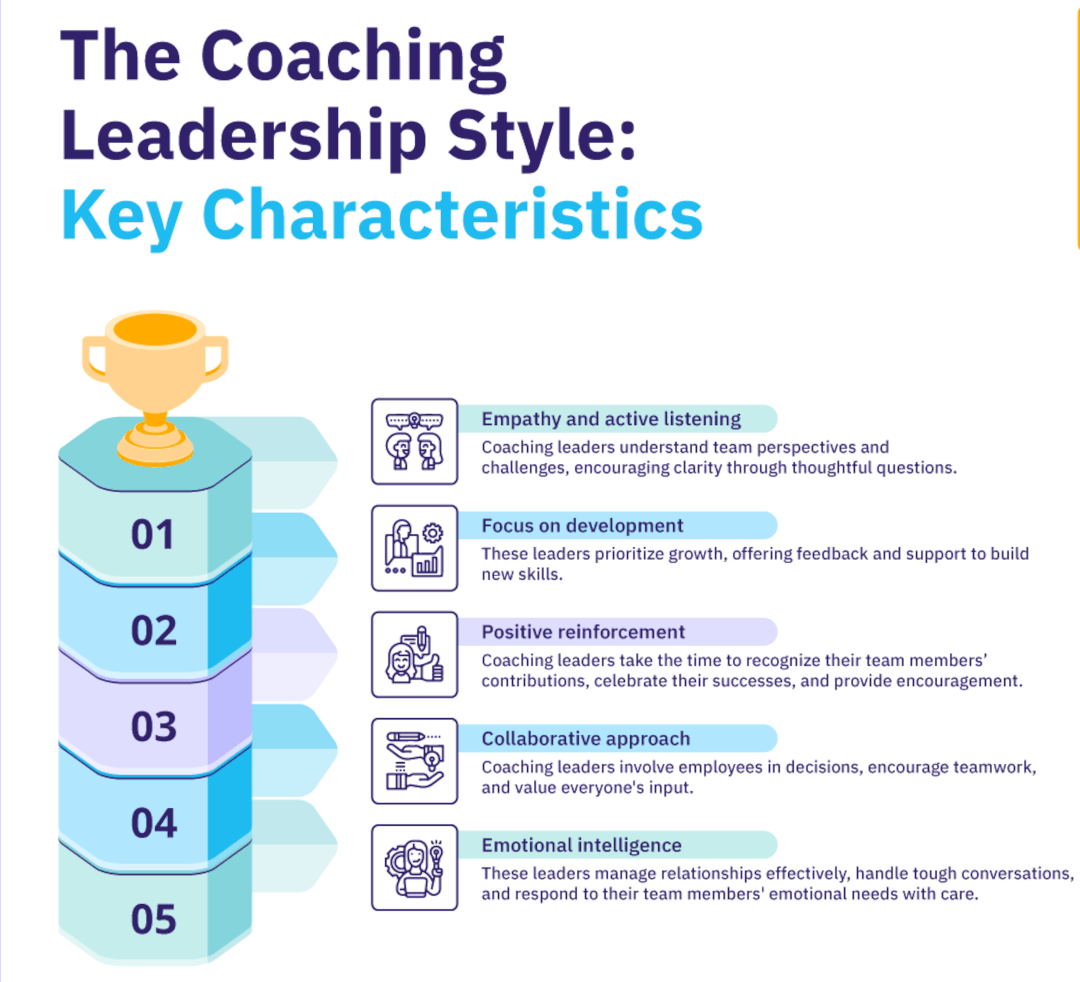
Image courtesy of AIHR.com. The coaching leader focuses on developing their team members' skills and abilities. They provide feedback and guidance to help their team members improve their performance. This style is most effective in situations where team members need to learn new skills or improve their performance, such as in sales or customer service. The coaching leader fosters a sense of growth and development among their team members, leading to higher engagement and motivation. However, this style can lead to lack of structure and accountability among team members.
-
Bureaucratic
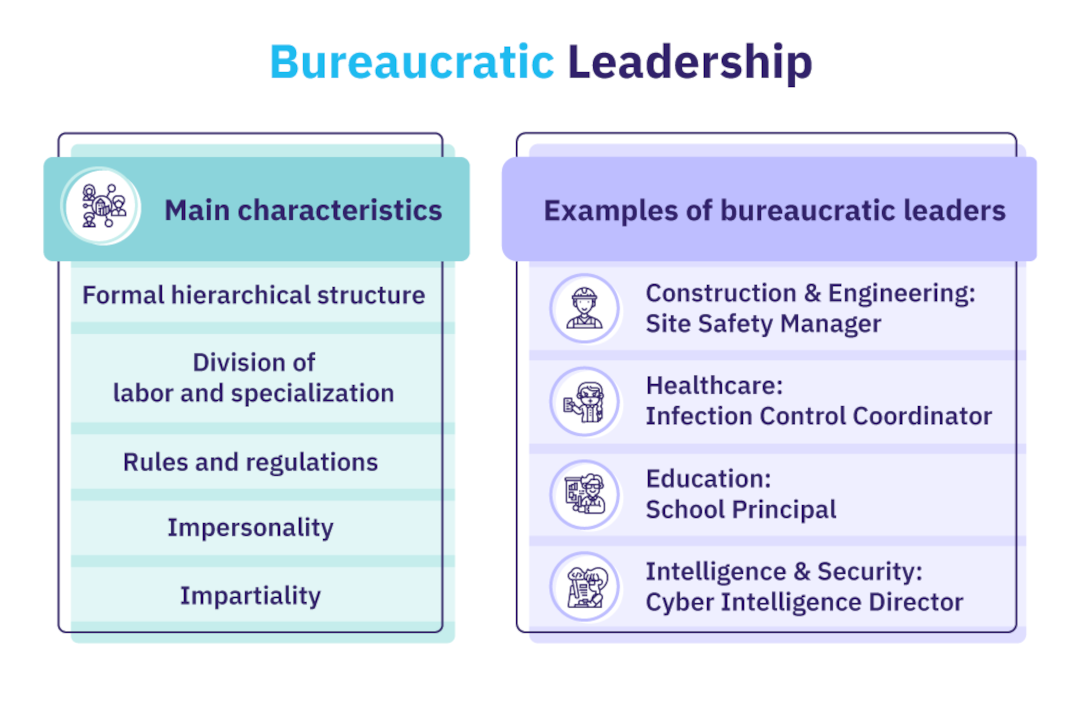
Image courtesy of AIHR.com. The bureaucratic leader follows rules and procedures strictly and expects their team members to do the same. They prioritize consistency and standardization in their work. This style is most effective in situations where safety and compliance are critical, such as in healthcare or government settings. The bureaucratic leader provides clear guidelines and expectations for their team members, leading to higher efficiency and productivity. However, this style can lead to lack of creativity and innovation among team members.
Versatility, Adaptability
Not a single leadership style is best for all situations. A good leader is versatile and able to adapt their leadership style to the situation at hand as well as their team's capabilities and organizational maturity. They have great situational awareness and are able to read the needs of their team members. They are also self-aware and understand their own strengths and weaknesses as a leader. By being versatile, a leader can build a high-achieving performance culture that consistently delivers exceptional results within budget and schedule.
Practice Make Perfect
Great leaders are not born; they are made through practice and experience. Leadership is a skill that can be developed and honed over time. By studying different leadership styles and practicing them in different situations, a leader can become more versatile and effective. They can also learn from their mistakes and failures, using them as opportunities for growth and development. Remember, leadership is a journey, not a destination. Keep learning, keep growing, and keep leading.
The next six chapters focus on practical aspects of management and leadership; how to create an inspired and inspiring vision, write a compelling mission statement, formulate SMART objectives, develop effective strategy, introduce workable tactics, and focus on excellence in execution. Read the next chapter on Vision to learn about the creating an inspired, inspiring, motivating, and aspirational vision.

About Me
Location: Gyöngyös, Hungary (GMT+1) and pretty much anywhere else in the world. I am a digital nomad and travel while working, or vice versa.
I was born in Budapest, Hungary where I grew up (albeit many would debate the conclusion). I escaped the then communist country at age 19 and emigrated to the United States. After a 40-year career as a software engineer, manager, director and business owner, I retired to the Philippines where I had lived for three years while traveling the world. Since November, 2010, I am very happily married to a lovely Filipina. We now make our more-or-less permanent home in Gyöngyös, Hungary. More…