
Conclusions
The Quest for Purpose
The Journey to Mastery: Bringing It All Together
We've traveled a long road together through these pages — from the deeply personal work of spiritual growth to the practical disciplines of organizational excellence. This journey mirrors life itself: we are simultaneously spiritual beings seeking meaning and practical beings creating value in the world. Both dimensions matter. Both require mastery.
Two Paths, One Journey
This book has really been two books woven together, each incomplete without the other:
Part I: The Inner Journey�Personal Mastery
The first part of our journey focused inward, on becoming better human beings through self-awareness and spiritual evolution:
- Clearing: We began by clearing away the debris — letting go of worry about the future and guilt about the past to live fully in the present moment. Until we clear this wreckage, we cannot see clearly or move forward freely.
- Fear: We explored fear as the absence of love, understanding that most fear is irrational and keeps us from our highest good. We learned that choosing love over fear is the foundation of spiritual growth.
- Ego: We examined the ego's role — neither enemy nor master, but a tool to be managed. We discovered that the ego serves us best when our Higher Self guides major life decisions while the ego handles analytical tasks.
- Judgments: We learned that judgments create separation where unity exists, and that elevating judgments to preferences expressed through discernment brings inner peace.
- Responsibility: We embraced personal responsibility as the path to empowerment, recognizing that we are response-able — able to choose our response to any circumstance.
- Victimhood vs. Mastery: We chose mastery over victimhood, understanding that life happens for us, not to us, and that we always have choice even when we don't have control.
- Acceptance: We discovered acceptance as the path to inner peace — not resignation, but the recognition that we cannot change what we won't accept, and that resistance creates suffering.
- Illusions: We examined the grand illusions — time, money, and death — recognizing them as constructs of the mind rather than ultimate realities, freeing us from their tyranny.
- Love: We returned to love as our true nature and the Tao of self-realization, understanding that we are love expressing itself through our relationships and actions.
- Relationships: We explored how authentic relationships built on trust, respect, and integrity allow love to manifest in our lives, creating the four types of connection: intellectual, emotional, physical, and spiritual.
Part II: The Outer Journey — Organizational Mastery
The second part turned outward, applying these principles to how we create value in organizations and the world:
- Vision: We learned to articulate an inspiring picture of the future that mobilizes energy and aligns efforts toward common aspirations. Vision answers "where are we going?" and "what will success look like?"
- Mission: We crafted mission statements that define why we exist and what unique value we provide. Mission gives purpose to daily work and meaning to organizational existence.
- Objectives: We developed SMART objectives that translate vision and mission into concrete, measurable goals with clear constraints, creating the bridge from aspiration to action.
- Strategy: We explored strategic planning through the 3Cs — understanding customers deeply, analyzing competitive positioning, and leveraging core competencies to create sustainable advantage.
- Tactics: We transformed strategy into detailed tactical plans with allocated resources, assigned responsibilities, defined timelines, and measurable outcomes that guide execution.
- Execution: We focused on operational excellence through disciplined execution, balancing quality and quantity, implementing continuous improvement, and building cultures of accountability and learning.
The Integration: Personal and Professional Unity
These two journeys — inner and outer, personal and professional, spiritual and practical — are not separate. They are integrated aspects of a whole life well-lived. The principles from the inner journey inform how we lead organizations:
- From clearing to vision: Only when we clear our inner landscape can we see clearly enough to envision compelling futures for ourselves and our organizations.
- From acceptance to strategy: Accepting reality as it is, not as we wish it were, enables clear-eyed strategic thinking unclouded by denial or wishful thinking.
- From responsibility to accountability: Personal responsibility practiced in our inner life manifests as organizational accountability in our outer work.
- From love to leadership: Leading from love rather than fear creates psychologically safe cultures where people can do their best work and contribute their full talents.
- From judgment to discernment: Replacing judgment with discernment in personal life translates to data-driven decision-making in organizational contexts.
The Ongoing Practice
Neither personal mastery nor organizational excellence is a destination — both are continuous journeys requiring daily practice:
Daily Personal Practices
- Morning meditation: Begin each day with silence, centering yourself before engaging the world
- Mindful awareness: Notice your thoughts and choose your responses rather than reacting automatically
- Gratitude practice: Acknowledge what you're grateful for, shifting from scarcity to abundance mindset
- Self-reflection: Review your day each evening — what worked well? What would you do differently?
- Continuous learning: Read, study, seek wisdom from teachers and experiences
Daily Organizational Practices
- Clear priorities: Know your vital few objectives and focus energy there
- Visible metrics: Track what matters and make performance transparent
- Problem-solving: When issues arise, address root causes systematically
- Improvement mindset: Look for small ways to do things better every day
- Team alignment: Ensure everyone understands goals, plans, and their role in success
From Knowledge to Wisdom
Reading this book has given you knowledge — concepts, frameworks, and tools. But knowledge becomes wisdom only through application. The real work begins now:
- Start small: Don't try to implement everything at once. Choose one practice from the personal journey and one from the organizational journey. Master these before adding more.
- Be patient: Transformation takes time. Spiritual evolution and cultural change are measured in months and years, not days. Trust the process.
- Embrace setbacks: You will backslide. You will forget. You will fall into old patterns. This is normal. What matters is noticing and choosing again, and again, and again.
- Find support: Share this journey with others. Join communities of practice. Find teachers, coaches, and fellow travelers. We grow faster together.
- Teach what you learn: The best way to deepen understanding is to teach others. Share these principles with your team, your family, anyone who will listen.
The Ultimate Purpose
Throughout this book, we've been on a quest for purpose. Perhaps now you see that purpose isn't something to find — it's something to create through how you live. Your purpose is to:
- Grow: Continuously evolve toward higher consciousness and greater capability
- Love: Express your true nature as love in all relationships and actions
- Serve: Create value for others through your unique gifts and contributions
- Learn: Extract wisdom from every experience, success or failure
- Lead: Model the principles you believe in and inspire others toward their own mastery
This is the quest — not for some distant goal, but for full presence in this moment, bringing your whole self to whatever you do, living authentically and contributing meaningfully. When you do this, purpose isn't something you have�it's something you are.
Parting Words
We are all works in progress, fellow travelers on this journey called life. I don't claim to have mastered these principles — I practice them daily with varying degrees of success. What I can tell you with certainty is that the practice itself transforms you, whether you achieve perfect execution or not.
Some days you will operate from your Higher Self, making choices aligned with love and service. Other days your ego will dominate, and you'll react with fear or judgment. This is being human. What matters is the trajectory, the long arc bending toward greater consciousness and contribution.
Remember: You are not your thoughts, your achievements, your failures, or your circumstances. You are the awareness observing all of these. You are the space in which life unfolds. You are love expressing itself in this particular time and place.
Trust your journey. Honor where you are. Keep practicing. The results will come not when you grasp for them but when you surrender to the process and trust the path. You have come far. Read APPENDIX I. — Belief & Religion as you have the time and inclination. I will add more as I have the time and inclination.
May you find inner peace amidst life's chaos. May you create outer value through aligned action. May you grow in wisdom, love in fullness, and serve with joy. May your quest for purpose lead you home to yourself.
The journey continues. Walk in light.
A Personal Note
I have poured my soul out to you on these pages. I would appreciate hearing your thoughts about this book. Please leave a footprint on my blog in the form of a comment, or via a private note at Feedback. I will do my best to respond to all. Namast�.
Thank you for devoting your time to read my book. I hope you found it useful. If you did, please consider honoring me with
a small tip via my tip jar.
If you have any questions or comments, please contact me.
In peace and gratitude,
John Korondy
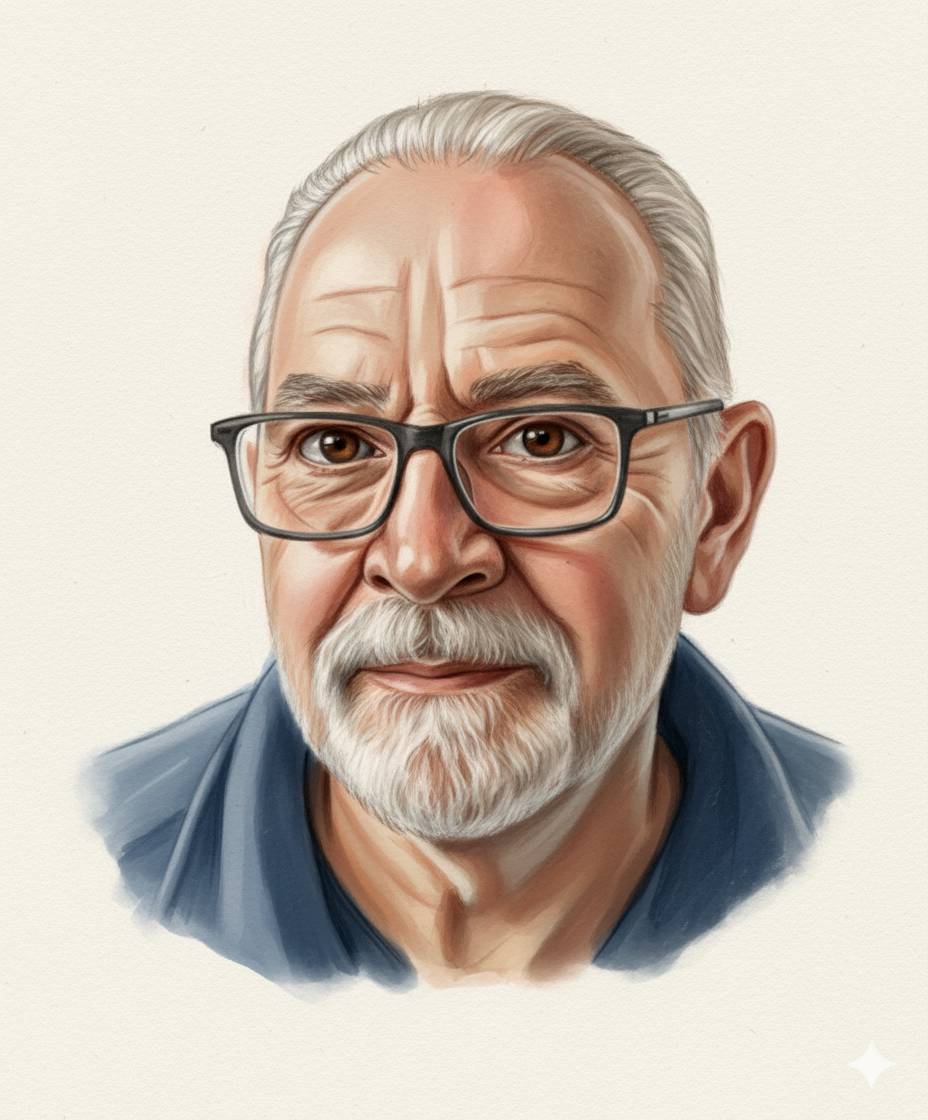
About Me
Location: Gyöngyös, Hungary (GMT+1) and pretty much anywhere else in the world. I am a digital nomad and travel while working, or vice versa.
I was born in Budapest, Hungary where I grew up (albeit many would debate the conclusion). I escaped the then communist country at age 19 and emigrated to the United States. After a 40-year career as a software engineer, manager, director and business owner, I retired to the Philippines where I had lived for three years while traveling the world. Since November, 2010, I am very happily married to a lovely Filipina. We now make our more-or-less permanent home in Gyöngyös, Hungary. More…